- On foot: On the square
- Getting there: Walk from anywhere downtown; garages nearby
Public garages sit a block or two away. On market days and festival weekends the square fills early, so arrive before mid-morning.
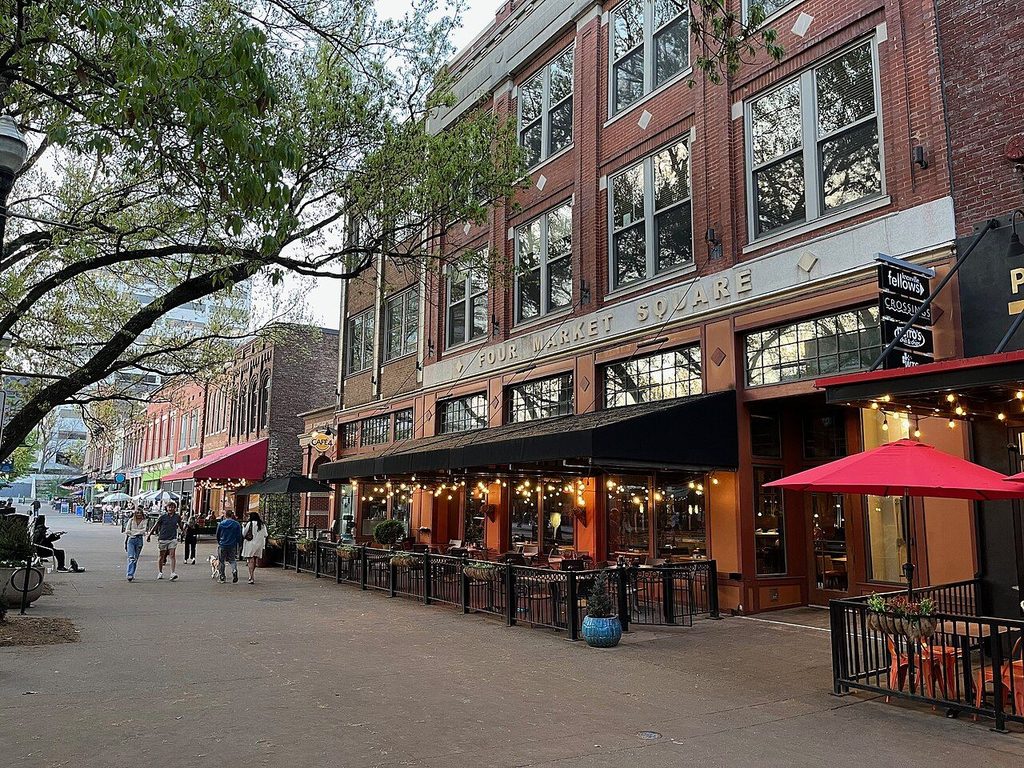
Market Square is a long rectangle of brick and stone set between Gay Street and Market Street, closed to cars and lined with two- and three-story buildings. It is the easiest place to start a walk in downtown Knoxville, because almost everything else in these notes is within a short stroll of its edges.
A square built for selling
The square dates from the 1850s, when land was given to the town on the condition that it be used as a market. Farmers from the surrounding hills and valleys brought wagons of produce, meat and firewood, and a market house stood down the middle of the square for about a century. Over time it became the place where townspeople and country people met, traded and argued.
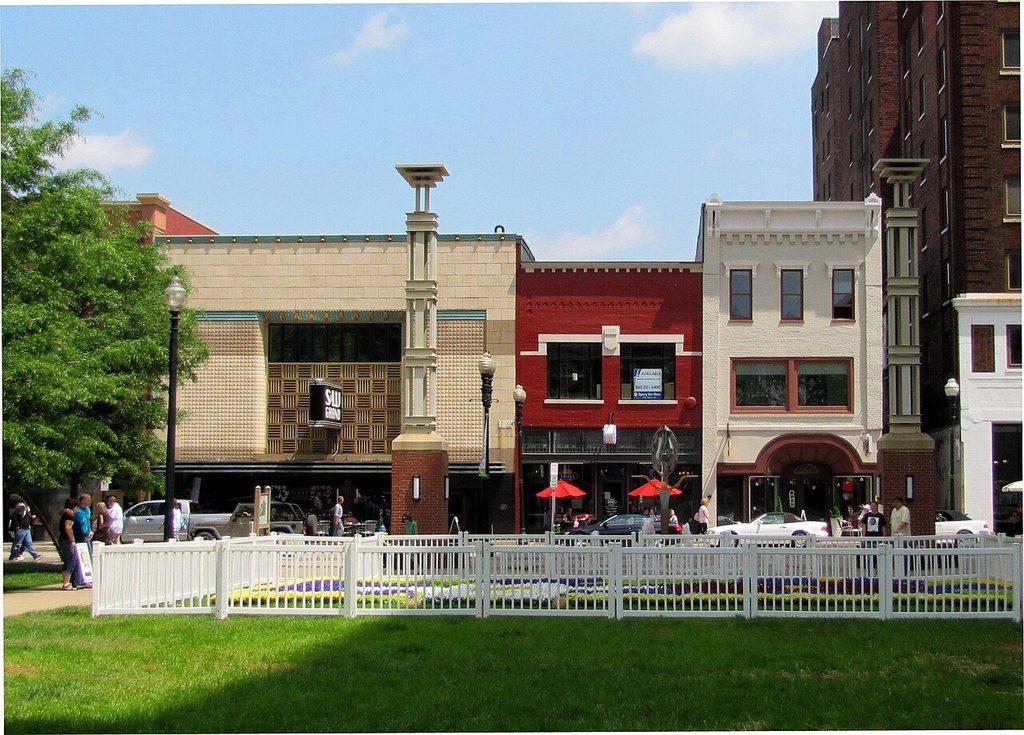
The last market house came down in 1960, and the square went through some thin decades as shopping moved to the suburbs. Through the 1990s and 2000s the buildings around it were restored one by one, with flats on the upper floors and street-level rooms reopened. What you see now is the result of that slow repair rather than a single project, which is why the facades do not match: some are plain brick, some carry cast iron, some have newer fronts on old frames.
What to look for
Walk the full length once without stopping. The south end has more open paving and a stage area that is used for concerts and events in the warmer months. On the square itself you will find the Women's Suffrage Memorial, a bronze group of three women who campaigned for the vote. It marks the fact that Tennessee's ratification in 1920 completed the approval of the Nineteenth Amendment, and that the deciding vote in the state legislature came from a young East Tennessee lawmaker.
Look up as you go. The upper stories keep more of their original detail than the shopfronts below: window hoods, brick corbels, painted lettering ghosts and a few dated cornices. A short pass along the east side and back along the west side shows how the buildings were added piecemeal.
The square is a natural first stop before heading east to the theatres on Gay Street, which run parallel only a block away.
The farmers' market in season
The square still does what it was made for. In the warmer part of the year a farmers' market sets up on the paving, with growers and makers from the region selling vegetables, fruit, eggs, honey, plants, flowers and baked goods. The season usually runs from late spring into the autumn, on set days of the week, but days, hours and dates change from year to year.
Go early. The best produce and the shade both disappear by late morning in summer, and on Saturdays the square fills quickly. Bring small notes and a bag; many stalls take cards, but not all.
Walk on to The river and the urban wilderness
In winter the square is quieter. In some years a seasonal ice rink or holiday market appears on the paving; this also varies, so treat it as a possibility rather than a fixture.
Krutch Park next door
At the north-east corner of the square a passage leads to Krutch Park, a small landscaped park that links the square to Gay Street. It has lawns, mature trees, a stream and pools with stepping stones, and a scattering of public sculpture that changes from time to time. It is the best place downtown to sit in the shade for ten minutes, and on hot afternoons it is noticeably cooler than the brick paving next door.
The park takes its name from a local family whose bequest helped create it. From its eastern edge you look straight across Gay Street at a row of older commercial facades, which is a good way to read the street before you walk it.
Fitting it into a day
An hour is enough to walk the square, sit in the park and look at the memorial. If the market is on, give it longer. From here, a ten-minute walk west takes you to the Sunsphere and World's Fair Park, and a slightly longer one north, across the railroad viaduct, brings you to the brick warehouses of the Old City.
The square is busiest on weekend evenings and during festivals, when the stage is in use and crowds spill into the side streets. If you want to see the architecture clearly, an early weekday morning is the quietest time, with the light coming in low from the east across Krutch Park and the paving freshly washed.
The square is flat and fully paved, so it works for strollers and wheelchairs. Public restrooms and seating vary with the season and events; the park benches are the most reliable place to rest.
Bring: Cash, a shopping bag, a light jacket