- On foot: Fifteen minutes north
- Getting there: North over the Gay Street viaduct
Jackson Avenue sits below Gay Street; reach it by stairs or ramps from the viaduct. Pavements are uneven in places and lighting varies after dark.
The Old City is a small district of brick warehouses and commercial buildings on the northern edge of downtown Knoxville, around the railroad tracks. The name is fairly recent, but the buildings are not. Most went up in the late nineteenth and early twentieth centuries, when the railroads made Knoxville a busy place for storing and shipping goods.
A district made by the railroad
When the railroad arrived in the 1850s, the low ground near the tracks became the obvious place for wholesale businesses. Warehouses were built close to the rails so goods could be loaded straight from freight cars, and the streets around them filled with shops, boarding houses and workshops serving the trade. Jackson Avenue, running alongside the tracks, became the heart of it.
As trucking replaced rail freight in the twentieth century, the warehouses emptied. Some were lost, but many survived because nobody needed the land badly enough to clear it. From the 1980s onward, the blocks were gradually rediscovered and the old name, the Old City, came into use. Upper floors were turned into flats and studios, and some ground floors reopened.
Jackson Avenue
Jackson Avenue runs below the level of Gay Street, which crosses the tracks on a viaduct. That difference in height is the key to reading the district: the original ground floors of many Gay Street buildings face Jackson Avenue one level down, and loading doors and ramps show where goods once came and went.
Walk the length of Jackson Avenue slowly. The warehouses are tall and plain, with rows of arched or flat-topped windows, iron fire escapes and painted lettering faded on the brick. Look for old loading docks raised to the height of a wagon bed, and for the iron shutters that still hang beside some doorways. Several buildings have been restored with care; a few are still waiting.
Walk on to World's Fair Park and the Sunsphere
Central Street crosses the district from north to south and has a cluster of older two- and three-story buildings. The few blocks around the junction of Central and Jackson are the busiest part of the Old City, especially in the evening.
The old station and freight depot
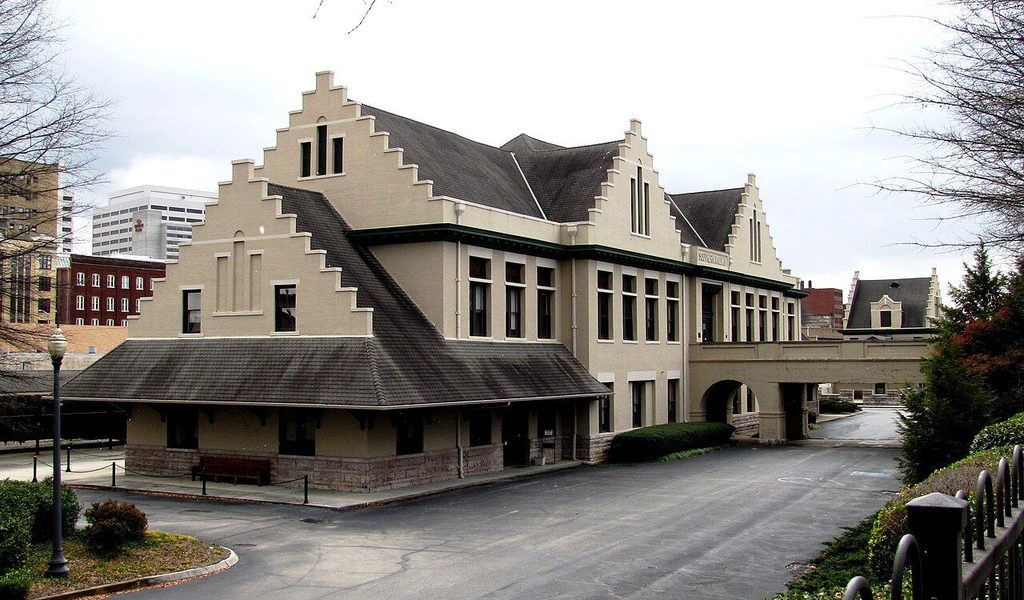
Just west of the Old City, near the tracks, stands the former Southern Railway passenger station, opened in the early 1900s. It is a long building in pale brick with stepped, Flemish-style gables, a dark slate roof and a covered drive at one end. It no longer serves passengers and has been adapted for other uses, but the outside is easy to see from the street.
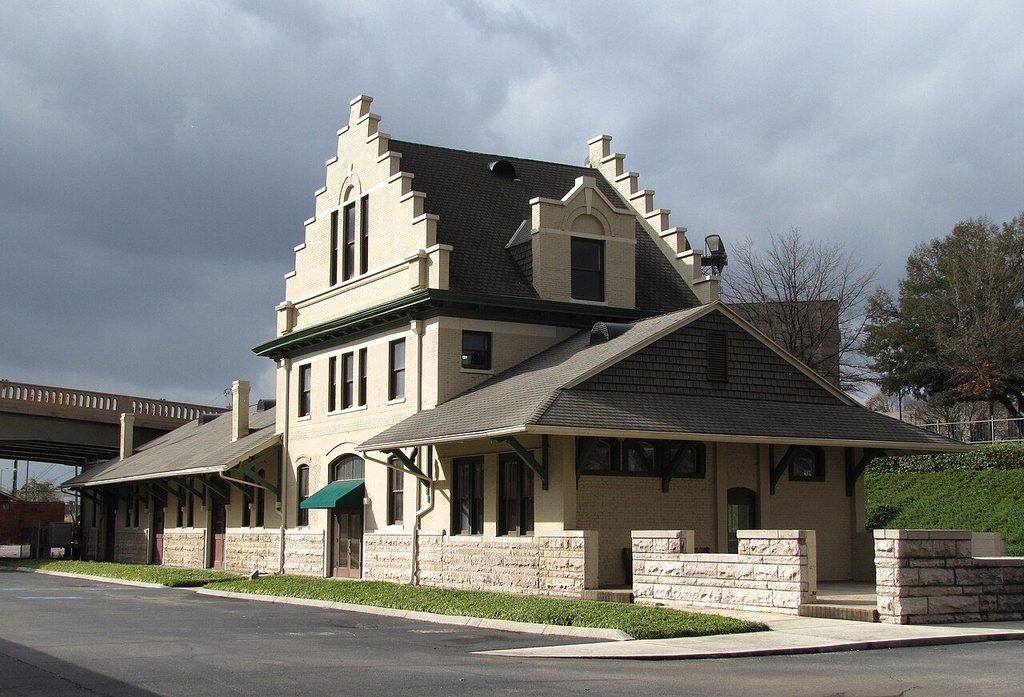
Nearby, the smaller freight depot repeats the same stepped gables on a smaller scale. Together with the surrounding warehouses they form part of a listed historic district that takes its name from the terminal and the warehouses around it.
Walking it
From Market Square, walk north up Gay Street to the viaduct, then take the stairs down to Jackson Avenue. The whole district can be walked in under an hour. Pavements are old and uneven in places, and some corners are poorly lit at night, so wear flat shoes and keep to the main streets after dark.
The Old City is quiet during weekday mornings, when it is easiest to look at the buildings and take photographs. In the evenings and at weekends the area around Central Street gets busier. Events are sometimes held in the streets, with closures and limited parking; check local listings if you are driving.
Bring a slow eye rather than a list. The pleasure of the Old City is in small things: the change in brick colour where a floor was added, a bricked-up arch that was once a loading door, the iron stars of tie rods holding walls together, the shadow of a painted advertisement that has outlived the business it named by most of a century.
Freight trains still use the tracks beside the district. Cross only at marked crossings and never on the rails themselves.
If you want a contrast after the brick and iron, the riverside path is a short walk south, part of the river and the urban wilderness walk.
Bring: Flat shoes for uneven pavements