- On foot: One block east
- Getting there: One block east of Market Square
Gay Street slopes down toward the river at its south end. Event nights at the theatres bring heavy traffic and full garages from early evening.
Gay Street is the spine of downtown Knoxville. It runs roughly north to south for about a mile, from the viaduct over the railroad tracks down to the bridge across the Tennessee River. The most interesting stretch for walking is the middle third, between the viaduct and the turn toward the river, where the old commercial blocks stand shoulder to shoulder.
The commercial blocks
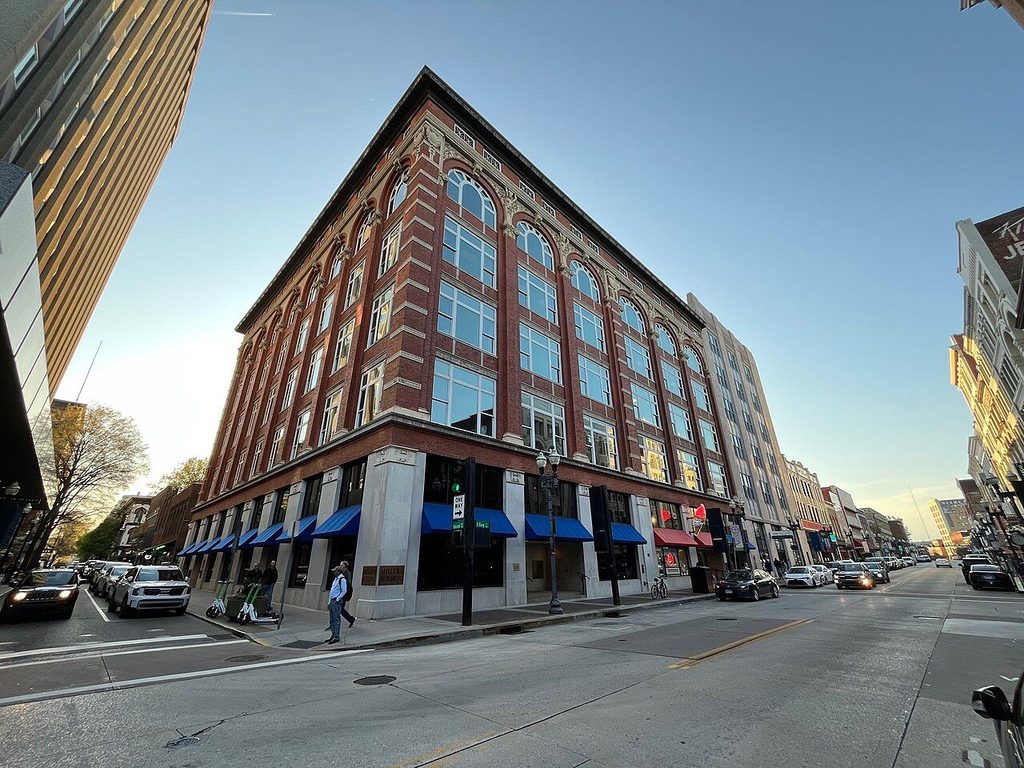
Most of the buildings you pass were built between the 1890s and the 1920s, when Knoxville was a busy rail and wholesale town. They follow a familiar pattern: shopfronts at street level, offices or storerooms above, and decorative tops in brick, terra cotta or stone. A few taller office buildings from the early twentieth century break the line, with arched upper windows and heavy cornices.
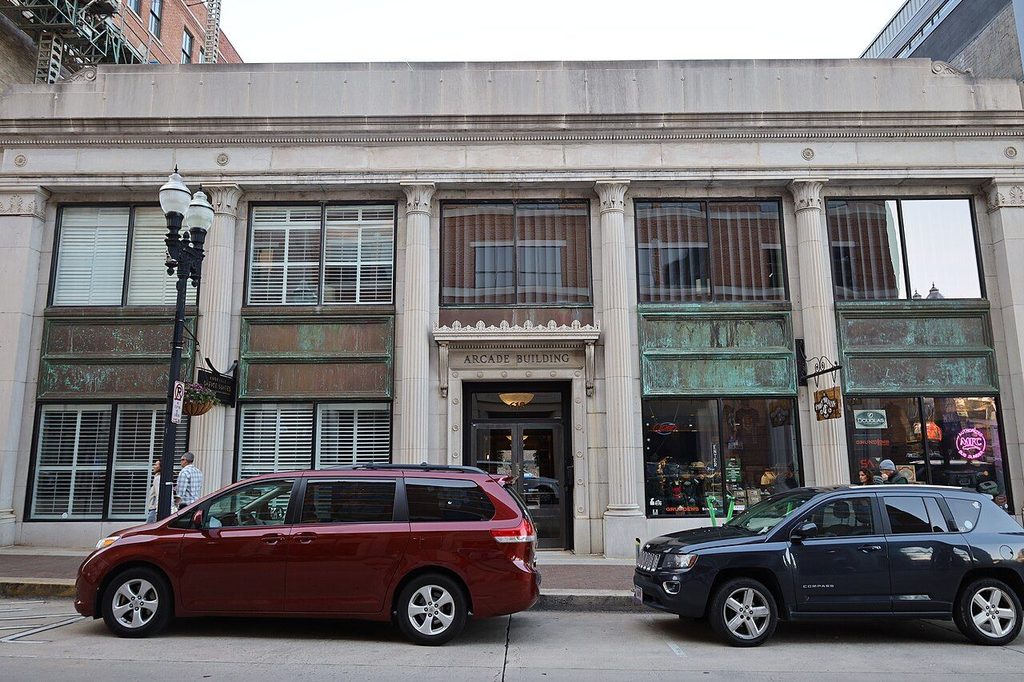
Many of these buildings stood empty for years after the department stores closed. Since the late 1990s most have been restored, and the upper floors now hold flats and offices. Walk slowly and look at the details: names cut into the stone over doorways, cast-iron columns, and tiled entrance floors that survived several changes of use.
Halfway along, the street passes the eastern edge of Krutch Park, which connects through to Market Square one block west. It is worth cutting through at least once to see how close the two are.
The theatres as buildings
The Tennessee Theatre opened in 1928 as a movie palace, and its long vertical sign and marquee are one of the landmarks of the street. Inside, the auditorium is in an ornate Spanish and Moorish style, and the theatre has a large theatre pipe organ that is still played. After a major restoration in the 2000s it reopened as a performing arts venue, and it has been named the official state theatre of Tennessee. If you cannot attend a performance, the lobby is sometimes open for tours or events.
A few blocks south, the Bijou Theatre occupies part of a much older building. The front section dates from the early nineteenth century and once served as a hotel; the theatre itself was added behind it in the first decade of the twentieth century. It is a smaller hall, and its scale and age make it feel very different from the Tennessee. Both theatres are public venues with busy calendars, so the outside is always visible even if the doors are closed.
Walk on to World's Fair Park and the Sunsphere
History along the way
Near the southern end of the business blocks, the East Tennessee History Center fills a stone federal building from the 1870s that once held the custom house, post office and courts. It houses a regional history museum and archives, and it is a good indoor stop on a hot or wet day.
The northern end of the street rises onto a viaduct that carries Gay Street over the railroad tracks. From the rail you look down on brick warehouses and loading docks, the edge of the Old City, which you can reach by the stairs and ramps just beyond.
Down to the bridge
South of the business blocks, Gay Street drops toward the Tennessee River and crosses it on a steel truss bridge that opened in 1898. It carries cars and has sidewalks on both sides, and walking out to the middle gives one of the better views of the downtown riverfront and the hills on the south bank.
From the bridge you can see the riverside path below on the north bank, part of the river and the urban wilderness walk. On the far side, roads lead toward the south Knoxville neighborhoods and the trail network beyond.
Gay Street is a working city street with traffic in both directions, so cross at the signals. Sidewalks are wide in the central blocks but narrower near the bridge. The walk from the viaduct to the middle of the bridge takes about half an hour at an easy pace, longer if you stop to read the facades.
Evenings when the theatres have shows are lively and crowded around the entrances. Morning and early afternoon are quieter and better for photographs, with the sun on the west side of the street before noon.
Bring: Comfortable shoes and a light layer